what happens to a chargeback to an account with no funds
The Consummate Chargeback Guide for Merchants and Consumers

Payment disputes are an inevitable outcome of a digital economic system. Equally in-person, manual transactions are replaced by frictionless, bill of fare-non-nowadays payments, the need to fairly intervene disputes between merchants and consumers is more important than ever.
Chargebacks are the chief tool banks use to resolve credit card payment disputes. When a consumer did not authorize a charge, or is unhappy with a product or service, they tin claiming the charge with their issuing banking concern. If the bank feels the consumer'south claim is valid, they will initiate a chargeback in order to reverse the payment.
The chargeback procedure is antiquated and governed past rules that are oftentimes unevenly enforced. Both merchants and consumers can feel frustrated by the system.
In this commodity, we'll explore how chargebacks work, where they came from, and how they take changed over fourth dimension. We'll also examine some of the consequences of chargeback misuse.
What Are Chargebacks?
- Chargeback
-
A chargeback is a credit or debit menu charge that is forcibly reversed by an issuing banking company. This typically happens later a cardholder claims a transaction was the result of fraud or abuse.
[noun]/* uh-kount teyk-oh-ver frawd/
Learn more about chargeback definitions
Fifty-fifty the most reputable online businesses will struggle with chargebacks. For cardholders, chargebacks human activity as a shield against criminals or dishonest business practices. For merchants, however, chargebacks can pose a serious threat to revenue and business sustainability.
One written report showed that payment disputes resulting from criminal activity cost merchants an estimated $20 billion in 2021. That's an 18% increase over 2020.
Chargebacks can seem unfair to merchants. They are meant to act equally a consumer safeguard. The procedure is naturally skewed towards the cardholder, providing protection from:

Merchant Fault

Merchant Fraud

Criminal Fraud
Common Question
What is a Bank Chargeback?
In addition to customer disputes, there is also something chosen a bank chargeback. This occurs when the issuer detects some anomaly in the transaction procedure. Truthful to their name, bank chargebacks are resolved betwixt the issuer and acquirer.
Difference Between a Chargeback and a Refund
To cardholders, chargebacks can seem merely like traditional refunds. They're not, though. That's the problem.
With most refunds, the cardholder is obligated to return whatever was purchased to get their money back. That'south not the case with chargebacks, where the cardholder bypasses the merchant altogether and asks the banking concern to intervene.
When this happens, the merchant loses the revenue from the auction, and the value of the merchandise. They also lose the value of overhead costs like shipping, fulfillment, and interchange. Finally, the merchant is also forced to pay a fee for every chargeback.
Larn more well-nigh the divergence betwixt refunds & chargebacks
Debit Card vs. Credit Card Chargebacks
Consumers tend to utilize credit and debit cards interchangeably. While at that place are a lot of similarities between the 2, debit cards and credit cards each offering different levels of fraud protection.
In cases of credit card fraud, the cardholder'southward liability is limited to no more than $50. Because the funds technically belong to the banking company, not to the cardholder, the bank may be more invested in trying to recover the money.
Learn more about credit carte chargebacks
In contrast, debit cards are tied to funds that actually exist in the cardholder's account, rather than to a line of credit issued past the depository financial institution. Cardholder liability for debit card fraud is limited to no more than than $500, assuming the cardholder reports the incident inside 60 days. Otherwise, their right to recover funds is dependent on the depository financial institution's judgement.
Learn more most debit card chargebacks
Where Did Chargebacks Come up From?
In the early 1970s—before all the above protections had been put in place—banking concern credit cards had not nonetheless gained widespread credence in the US.
Consumers were hesitant to use payment cards. To be fair, they had good reason to be skeptical. It wasn't hard to steal these early cards and use them for unauthorized transactions. If that happened, the legitimate cardholder could get stuck covering those bogus charges.
There were also complaints of merchants taking advantage of consumers. Some dishonest merchants inflated prices or added extra charges to a beak after the fact. The Fair Credit Billing Human activity of 1974 was an try to address these bug by creating chargebacks as we know them today.
Larn more than virtually the history of chargebacks
The chargeback option protected consumers in ii ways. First, it strictly limited consumer liability in cases of fraud. At the aforementioned time, it gave them the right to fight back against unfair or deceptive merchant practices.
Suggested Reading
Other Chargeback Legislation
The Electronic Funds Transfer Act provides like protections for debit card users.
Acquire more than nearly chargeback laws.
The federal mandate was designed to help relieve consumer fears. And, for the most part, it worked. Credit menu utilise exploded throughout the U.s. in the 1970s.
A one-half-century later on, chargebacks are nonetheless an important consumer protection machinery…at least, when they're used equally intended. Similar nosotros'll come across, nevertheless, that isn't what's happening.
How Do Chargebacks Work?
Let'south wait closer at the chargeback procedure itself. From the merchant'south perspective, stemming the flow of chargebacks is challenging, at best. There are multiple players and a lot of moving parts. Even worse, transactions can be disputed weeks or months afterwards the actual sale.
Learn more about the chargeback procedure
The number of steps involved in the chargeback process will vary based on a lot of different factors. That said, here's a basic rundown of how it works:


What if the merchant's prove doesn't refute the cardholder's claim? The transaction amount is permanently moved from the merchant to the cardholder, and the chargeback stands.
It may seem like merchants are basically beingness judged "guilty until proven innocent" hither. In truth, that's more or less the instance.
Like we said before, though, chargebacks remain an important consumer protection mechanism. Information technology'due south just one that has been subverted in such a way that modernistic merchants are actually becoming the victims.
Learn more about the chargeback life cycle
When Tin can Consumers Use Chargebacks?
Today, credit cards are such a ubiquitous part of life that many users don't even realize they accept chargeback protection. Those who know about chargebacks oftentimes fail to understand what is—and what isn't—a valid credit menu chargeback use case.
Of form, there are situations where cardholders take every right to file a chargeback:
- Fraud or unauthorized charges on the account.
- Orders that were never delivered.
- Merchandise that arrives damaged or defective.
- Orders that exercise not reflect what was purchased.
- Incorrect charges (additional charges or wrong totals).
For lost or stolen cards, cardholders should contact the bank immediately to preclude boosted losses. In well-nigh all other cases, though, the cardholder needs to talk directly to the merchant before calling the bank.
Well-nigh accidents or innocent mistakes can be rectified with a simple call to the merchant. This is better for both parties. The merchant avoids a chargeback, and the cardholder gets their money back much quicker than they would with a chargeback.
Of course, a chargeback may be in lodge if the merchant isn't able—or willing—to work toward a mutually agreeable solution. Information technology's generally better for merchants if they cooperate, though.
When are Consumers Not Entitled to Chargebacks?
Chargebacks may accept been designed as a class of consumer protection, but industry regulations take not kept pace with payments engineering science. This allowed chargebacks to get weapons which consumers can employ against merchants.
The net and eCommerce have made shopping more convenient than always. But, at the aforementioned time, filing a chargeback is also easier than e'er. The anonymity of online transactions makes information technology difficult to fully validate buyer's claims.
Because of chargeback corruption, merchants are now more likely to feel fraud coming from customers than from criminals. Friendly fraud—also called chargeback fraud—refers to situations where customers dispute legitimate charges. This can happen innocently or maliciously. The negative impact on the merchant is substantially the same either way, though.
There are multiple means a cardholder might file a chargeback inadvertently. For case, if the cardholder:
- does non recognize—or simply forgot about—the buy.
- forgot about a recurring payment.
- misunderstood the delivery engagement and believed they'd been scammed.
- asked the bank nearly a transaction, unknowingly initiating a dispute.
- believes a chargeback is the same every bit a refund.
- believes filing a chargeback volition be easier or more convenient.
That terminal one is highly relevant. Based on what consumers claim at the time of filing, about half of all chargebacks are blamed on "unauthorized transactions." A survey conducted by Chargebacks911, however, found that 81% of cardholders filed a chargeback simply considering they didn't have time to request a refund from the merchant.
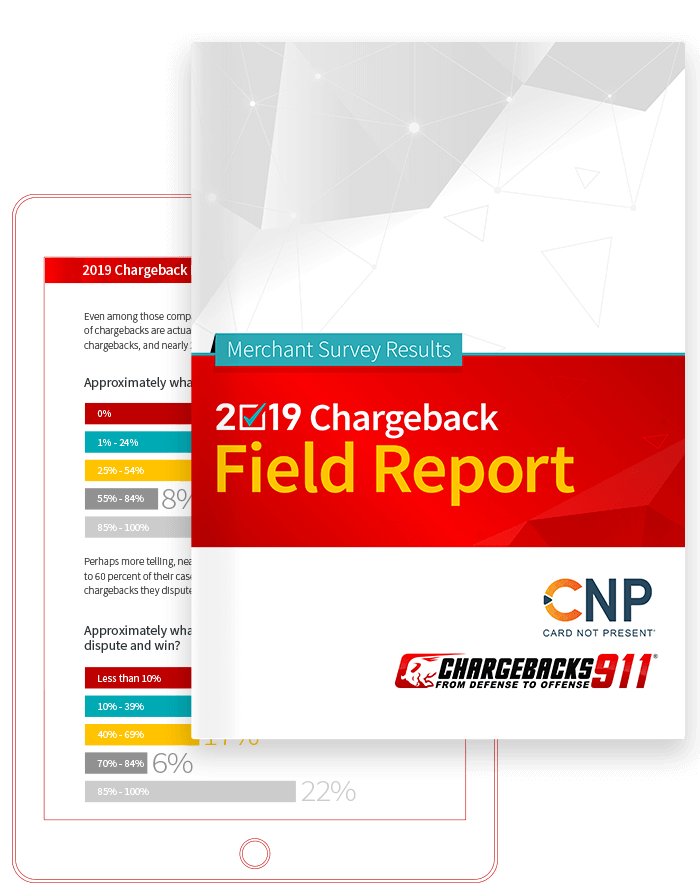
The 2021 Chargeback Field Report
The 2021 Chargeback Field Study is now bachelor. Based on a survey of over 400 Us and UK merchants, the written report presents a comprehensive, cantankerous-vertical look at the current state of chargebacks and chargeback management.
What Well-nigh Deliberate Chargeback Fraud?
Friendly fraud is a serious problem. Keep in heed, yet, that not all chargeback fraud is "friendly."
Consumers deliberately corruption the chargeback process for a variety of reasons:
- The cardholder wants to brand a return merely avoid a restocking or handling fee.
- The cardholder experiences "buyer'south remorse."
- The cardholder finds the return procedure also slow or cumbersome.
- The cardholder waited too long and the render time limit expired.
- A family member made the charge but the cardholder doesn't want to pay the bill.
- The cardholder wants to go something for complimentary.
Cardholders might think a single incident of chargeback fraud is no big deal. It adds up quickly, though. Chargebacks volition toll merchants approximately $117 billion annually by 2023. In reality, the costs could exist even higher when accounting for false positives, and other sources of lost revenue. The majority of these losses will be the effect of friendly fraud and chargeback corruption.
Learn more well-nigh chargeback costs
Chargeback Costs & Consequences: Merchants
Chargebacks have both short and long-term ramifications for merchants.
- Each fourth dimension a consumer files a chargeback, the merchant is striking with a fee ranging from $twenty to $100 per transaction. Even if the chargeback is afterward canceled, the merchant will still have to pay fees and administrative costs.
- If the consumer files a chargeback and simply keeps the merchandise, the merchant loses that revenue and any time to come potential profit.
- If monthly chargeback rates exceed a predetermined chargeback threshold, excessive fines (in the ballpark of $x,000) will exist levied against the business.
- If chargeback rates remain above the acceptable threshold, the acquiring banking company may simply finish the merchant'due south account.
If the merchant'due south account is terminated, that business organisation will be placed on the MATCH list. The business concern is blacklisted, and will be unable to secure a new bank account–fifty-fifty with a different service provider–for at to the lowest degree v years. Their only option will be to secure a high-risk merchant business relationship… if they tin can get a bank account at all.
While merchants take the right to dispute illegitimate chargebacks, doing so is more than difficult than it sounds. Crafting an constructive dispute takes significant resources. Merchants rarely win DIY chargeback responses; according to our data, the average net recovery rate for chargebacks is just 12%.
Chargeback Costs & Consequences: Consumers
Merchants aren't the just ones who will suffer due to illegitimate chargebacks and friendly fraud. In the end, consumers may pay a toll as well:
- A chargeback will typically take several months (traditional refunds commonly have a few days).
- If the bank discovers a chargeback is friendly fraud, the cardholder may be penalized, or their business relationship may even be closed.
- Cardholders who "cry wolf" likewise often may not get the help they need in cases of legitimate fraud.
- A banking company business relationship closed due to chargeback abuse may negatively impact the cardholder's credit score.
- In order to recoup for chargeback fraud, merchants raise their prices, which hurts all consumers.
Chargebacks for Dummies
Chargebacks can wreak havoc on your greenbacks flow and profitability. This Gratis paperback book is your guide for preventing chargebacks and, when they happen, fighting them more effectively.
Who is Responsible for Chargebacks?
For long-term change, both merchants and consumers need to be educated on chargeback protocols and best practices. Both parties also demand to have responsibleness for their actions in the process.
Cardholders must remember that credit carte du jour chargebacks should only be filed in farthermost situations. Chargebacks are a final resort; they should never exist the first action to take when seeking a refund.
Larn more most fractional chargebacks
Also, more than i party may be responsible for a dispute. When this happens, the banking company may issue a fractional chargeback, giving the cardholder their coin dorsum for the portion of the transaction to which they're believed to exist entitled.
For their role, merchants must work to reduce the risk of chargebacks, both legitimate and illegitimate. Seeing a driblet in friendly fraud may just crave providing prompt, transparent, and circumspect customer service.
The right prevention tools will help, too. Implementing fraud detection strategies will enable merchants to identify more fraud incidents earlier they happen.
Finally, fighting invalid chargebacks is a must for merchants. It helps brainwash consumers about the proper use of chargebacks. Plus, banks issue fewer claims against businesses who regularly contest illegitimate cases.
With proper education and action, merchants and consumers can encounter a reject in the number of fraudulent chargeback claims, both now and in the future.
The Bottom Line
eCommerce technology is constantly evolving, and new chargeback threats appear daily. An effective chargeback management strategy must be flexible enough to place new trends and techniques, counteract new technology, and adjust on the fly to a shifting landscape.
No one understands this better than the experts at Chargebacks911® . That's why we offer the about comprehensive chargeback management services and products available. Our transparent, stop-to-end solutions go beyond prevention to revenue recovery and future growth.
Whatever you lot demand to fight chargebacks, we tin aid. Contact u.s.a. today for a free demo.
Prepare to become started?
We Take the Guesswork Out of Chargeback Management
Source: https://chargebacks911.com/chargebacks/
0 Response to "what happens to a chargeback to an account with no funds"
ارسال یک نظر